The Lengthy History of the Department of Education in the United States
In late February, Marco Island Academy had the privilege to host Erika Donalds, the Chair of the Center for Education Opportunity at the America First Policy Institute, as part of the national History Rocks! Tour to celebrate the return of education to the states.
This action by the Trump administration highlights an ongoing debate in the United States for several decades concerning the role of the federal government in K-12 education. However, many may be unaware of the lengthy history of the Department of Education throughout the nation’s history, with roots tracing back to the Reconstruction Era.
1867 – 1868
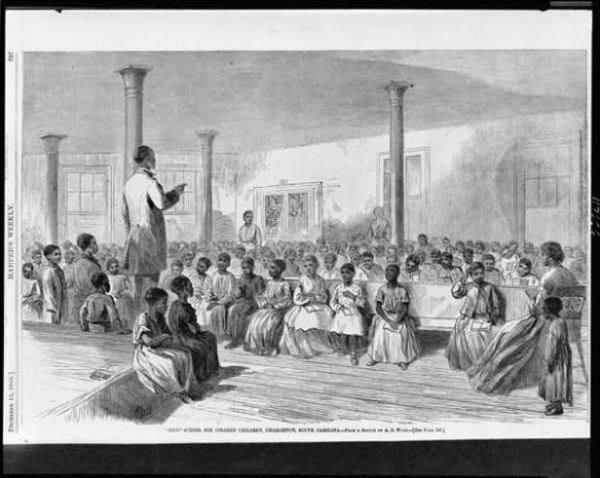
The first Department of Education (DOE) was established in 1867 via legislation signed by President Andrew Johnson in the years following the American Civil War and the assassination of President Abraham Lincoln.
The creation of the first DOE was heavily supported by abolitionists and Northerners as a culmination of decades-long efforts to create a free and universal school system funded by the government. Furthermore, the DOE would be collecting information and statistics to show the condition of education nationwide. This also included schools for freedmen, former slaves who had been emancipated.
However, these efforts were not well received in the former Confederate States in the South, in addition to some in the North. Many viewed the DOE as highly unusual, as the federal government had not been involved in education before. The controversy of educating freed slaves, the overreach of government, and a widespread consensus that it was unnecessary led to the eventual demotion of the DOE to an office within the Department of the Interior.
The DOE would not see light again until over a century later.
1979 – 1989
Established by the Department of Education Organization Act in 1979, the Department of Education we know today was created to “promote student achievement and preparation for global competitiveness by fostering educational excellence and ensuring equal access,” according to the DOE’s official mission statement.
At the time, education was a hot-button issue for Republicans and Democrats. President Jimmy Carter claimed that “Education is our most important national investment” when signing the Act into law. By creating a federal department to oversee education in the United States, it signaled a shift in policy, placing the importance of education of the nation on par with agriculture, health, and defense. The DOE would work to improve the quality of education across the states, provide funding grants for schools, and promote anti-discrimination laws in education.
Carter’s biggest political opponent and the leader of the conservative wave across America, Ronald Reagan, was in fierce opposition to the DOE going into the election of 1980, as was the Republican platform. “Control of our schools belongs to the states, local communities, and most of all, the parents and teachers,” said President Reagan in his 1988 State of the Union address. Despite this belief, Reagan could not abolish the DOE due to a Democratic House of Representatives that supported the department throughout

his presidency.
1990 – 1999
By the time of the 1990s, the Republican Party platform had warmed up to the DOE. Instead of calling for the abolition of the department, the party wanted to reduce federal involvement in the education sector. This came in the form of promoting parental choice, shifting control to the states, and emphasizing the importance of family involvement in determining the education of their children.
The Democratic Party had likewise moderated its position on the DOE, acknowledging the need to decentralize federal control. Like their opponents, they supported public school choice, but emphasized the need for the DOE’s civil rights protections. They also advocated for greater investments in public schools, including programs to reduce dropout rates and increase graduation rates.
However, the DOE faded into the background of the 1992 and 1996 election seasons as more pressing issues, such as expanding global trade, healthcare reform, and government accountability, came to the forefront.
2000 – 2015
By the time of the new millennium, the DOE was viewed as an essential department by a large consensus. Both Republican and Democratic administrations under George W. Bush and Barack Obama, respectively, instead pushed for education policy reforms.
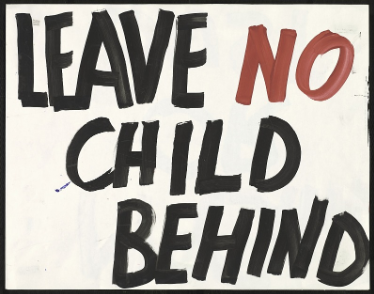
The No Child Left Behind Act of 2002 (NCLB) mandated annual standardized testing in reading and mathematics, and tied federal funding to school accountability based on attendance and achievement. This produced mixed results across the country, with increases in reading and math scores, but many critics were concerned that the pressure of standardized testing caused teachers to only instruct what was necessary to pass exams, or “teaching to the test,” instead of preparing students with valuable life skills.
Barack Obama’s Race to the Top initiative launched a competitive grant program in 2009 to spur innovation and reform in K-12 education by incentivizing the states to adopt new policies. This led to 40 states adopting the Common Core State Standards. These were a set of clear, benchmarked learning goals created by the states to ensure all students could be prepared for college, future careers, and life. Critics of Obama’s initiative feared it would lead to an unprecedented privatization of education while still suffering the shortcomings of NCLB.
The Republican and Democratic platforms on education remained similar to their 90s counterparts throughout most of the 2010s. Republicans wished to expand school choice and reduce federal oversight, while Democrats continued to push the importance of anti-discrimination protections and federal funding for smaller communities.
2016 – 2025
With the advent of the 2016 election and the introduction of political outsider Donald Trump into the mix, policy platforms shifted once again. The abolition of the DOE was back on the menu.
President Donald Trump’s first term saw reforms to American education that moved to cut the DOE’s funding, make structural changes, and eliminate the Common Core Curriculum in favor of community-selected curriculum. These calls were made in accordance with Trump’s populist platform and a desire to return education to communities. In parallel to Reagan, most of these bids were rejected by the Democratic-controlled Congress. There were also changes in the enforcement of Title IX and anti-discrimination laws from the Obama era, affecting transgender students. This back-and-forth on the issue of education was reflective of Trump’s “shaking up” of the political world as an outsider.
The following Biden administration reversed many of Trump’s policies, especially those concerning civil rights protections and Diversity, Equity, and Inclusion policies. Furthermore, a large part of Joe Biden’s agenda was providing emergency K-12 funding, $122 billion, to support recovery from the COVID-19 pandemic that locked down the world. However, with these massive expenditures and relatively lax parameters and accountability, fiscal conservatives critiqued the lack of oversight for these funds.
As we approach the halfway point of Donald Trump’s second term in the White House, with a narrowly divided Congress, many of his education policies have made it through via Executive Order (EO) in early 2025. This included EO 14151, ending Diversity, Equity, and Inclusion programs in the United States, and EO 14173, restoring merit-based opportunities and ending illegal discrimination. The most notable of these, however, has been EO 14242.
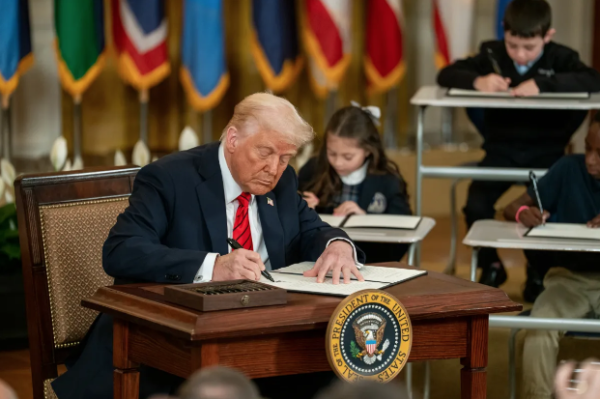
EO 14242 directs that the Secretary of Education take whatever legal measures necessary to shut down the department and return education “to the States and local communities.” Following this, the DOE has seen a reduction in staff by half, new policy directives to defer authority to the States, and more than $12 billion in K-12 education funding allocated by Congress has been disrupted.
The current Secretary, Linda McMahon, has been a strong advocate for returning education to the states and applauded Trump’s actions: “Education is fundamentally a state responsibility…we will empower states to take charge and advocate for and implement what is best for students, families, and educators in their communities.”