Why Vote?
Voting is more than the echoing of party slogans and campaign chants. It is also much more than running from what we fear. To vote for something is to put your full support behind a set of ideals. It is the unabridged right of all qualified citizens to be equally represented in a government designed to serve them.
Voting gives the American people the opportunity to address their grievances with our government, an ability that the Founding Fathers found lacking in the days of the Revolution. Paired with the freedom of speech and right to bear Arms, these core God-given rights protect us from tyranny and authoritarianism.
The importance of voting has been stated in various mediums by numerous speakers. Whether it’s through the lens of a civic duty, requirement, act of protest, or statement of support, it is a widespread consensus that everyone eligible should vote.
The next elections will undoubtedly be in the hands of those currently in high school classrooms and college dorm rooms, with the Generation Z voting bloc only growing with each year. While the majority of Generation Z is still unable to vote, many teens have taken a political interest due to the domestic turmoil thus far of the 2020s.
Recent Voting Statistics
The outcome of elections can affect every aspect in one individual’s life, whether it be policy values, family relations, or economic situations. Many voters tend to make their decision using the latter. This is usually referred to as voting with your wallet.
Studies conducted by the Center for Information & Research on Civic Learning and Engagement, found that 47% of Generation Z voted in the 2024 election, a decrease of 3% from 2020. Exit polls from these voters indicated a strong prioritization of the economy and cost of living, at an astonishing 64%, more than two-thirds of respondents.
With the economy and cost of living seeming to be top-of-mind for many voters, especially Generation Z, there can be an expected rise in more turnout from the younger generation in future elections, particularly the 2026 Midterms and 2028 Presidential election.
Callbacks to 2008
As it stands, the current level of Gen Z voter turnout is on-par with the Millennial voter turnout in the 2008 election, hovering around 50% with majority support in favor of then Senator Barack Obama.
At the time of the 2008 election, the United States was in the midst of what became known as The Great Recession, a period of economic turmoil that began in December of 2007. This economic crash was spurred by the bursting of the housing market, leading to bank failures, mass layoffs, and financial stagnation. This crisis was a major driving force of younger voters to the polls.
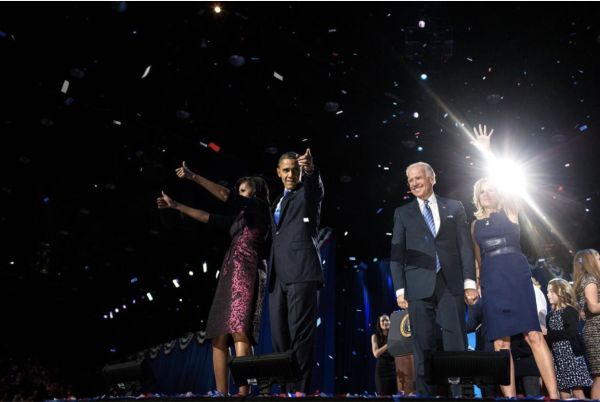
With the incumbent president, George W. Bush, blamed for not only the ongoing financial hardship, but also extremely controversial foreign and domestic policies, 66% of those 18-29 found themselves voting for Obama’s message of hope and change over Republican Candidate John McCain, who was linked to Bush’s unpopularity. These grievances with the Bush Administration from the youth led directly to the election of President Barack Obama.
In 2026, we find ourselves pivoting once again towards what could be a major upset of political power. With deeply controversial policies on behalf of the Trump Administration concerning nearly every facet of American politics, more and more of Generation Z is taking an interest in their civic duties.
The Price of Gas
As noted earlier, the biggest focus of Generation Z seems to be the economy and cost of living, in other words, affordability. There has been great friction between these current and upcoming voters with President Donald Trump over his repeated claims that the issue of affordability was a “hoax” created by the Biden Administration and his political opponents to discredit his efforts.
While Marco Island exists in its own bubble, separated from the ongoing violence in Minneapolis and barely chilled in the face of deadly snowstorms across the nation, the effects of the incumbent administration are not absent.
On any given day, a student from Marco Island Academy can drive ten minutes from the city limits to the closest Walmart. Within its boundaries is a Murphy USA gas station that is found to consistently feature the lowest price for regular fuel–usually undercutting the nearby RaceTrac by a few cents. With many students driving to and from school, the price of gas is a noticeable marker for many.
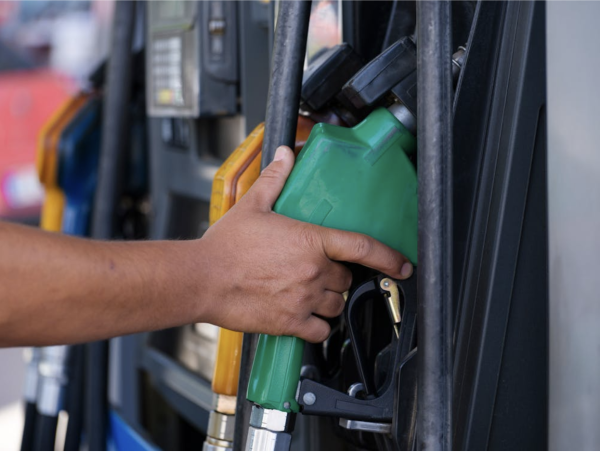
At certain occasions, gas would go as low as $2.66, according to eyewitness reports spread at lunchtime. Other times, it would hike back up to $3.17 for a few days and the student body would tighten their belts until it subsided.
In similar fashion to his firebrand personality, the price of gas seems to jump up and down with President Trump. An average day in 2025 would see a price hovering around $3, typically in the range of $2.95 – .99.
As we’ve entered the 2026, many appear to notice Murphy USA continues to hover around a $2.80 price point for gas, with occasional dips and hikes yet to be seen.Needless to say, many students, and adults, would appreciate consistency in the price of gas.
Closing Thoughts
As grievances rise from the younger generation, they will eventually have to be addressed. If we use the 2008 election to indicate patterns as for how 2028 will unfold, it is safe to assume that Generation Z will play a similar role in electing the next president as Millennials had for Obama.
Voting is the guarantee that people have a voice in their government, and should be exercised as a right at every opportunity.