


The newly discovered asteroid 2025 MN45 has broken scientific records as a massive asteroid with an unusually fast rotation rate. Its extreme nature challenges assumptions about how large asteroids remain structurally intact, making it a significant discovery in planetary science.
First Observations at the Vera C. Rubin Observatory
During a first-look event in June 2025, scientists at the NSF–DOE Vera C. Rubin Observatory announced that the observatory had already identified thousands of asteroids, including approximately 1,900 previously unseen, using its wide-field camera and rapid, repeated sky surveys to detect moving objects against the background of stars.
Discovery of Ultra-Fast-Rotating Asteroids
Among the 1,900 newly identified asteroids, astronomers discovered 19 ultra-fast-rotating asteroids. These rare asteroids rotate at speeds far greater than what scientists typically observe, especially for objects of their size.
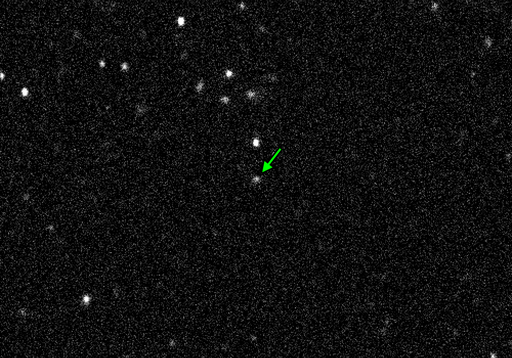
An ultra-fast-rotating asteroid is defined as one that spins faster than the 2.2-hour rotation barrier. This barrier represents the speed at which centrifugal forces from rotation would normally overcome an asteroid’s internal cohesion, causing it to break apart, as per the article Estimates of Rotation Periods for Jupiter Trojans with the Zwicky Transient Facility Photometric Lightcurves. While smaller asteroids are more likely to exceed this limit due to their lower mass, in general, larger asteroids are unable to. This makes the discovery of these 19 objects, particularly 2025 MN45, remarkable.
2025 MN45 the Record Breaker
Asteroid 2025 MN45 is roughly 710 meters in diameter and has set a new record as the fastest-spinning asteroid ever observed at that size. It completes one full rotation in about 113 seconds, far exceeding the expected rotation limits for objects larger than 500 meters across, according to The Stanford Report. This extreme spin suggests that MN45 isn’t a loosely bound “rubble pile” like most asteroids; instead, it must be composed of unusually strong, solid material to hold itself together at such a rapid rate.
What Rotation Rates Reveal About Asteroids
An asteroid’s rotation rate provides insight into its history and composition. This example of extremely rapid rotation may indicate that the asteroid is a fragment of a larger body that was shattered in a collision. Alternatively, it could also suggest that the asteroid has an unusually strong internal structure or is composed of solid rock rather than loosely held rubble.
By studying fast-spinning asteroids like 2025 MN45, astronomers can gain deeper insight into how asteroids form, evolve, and survive extreme conditions in space.

















.jpg”)
